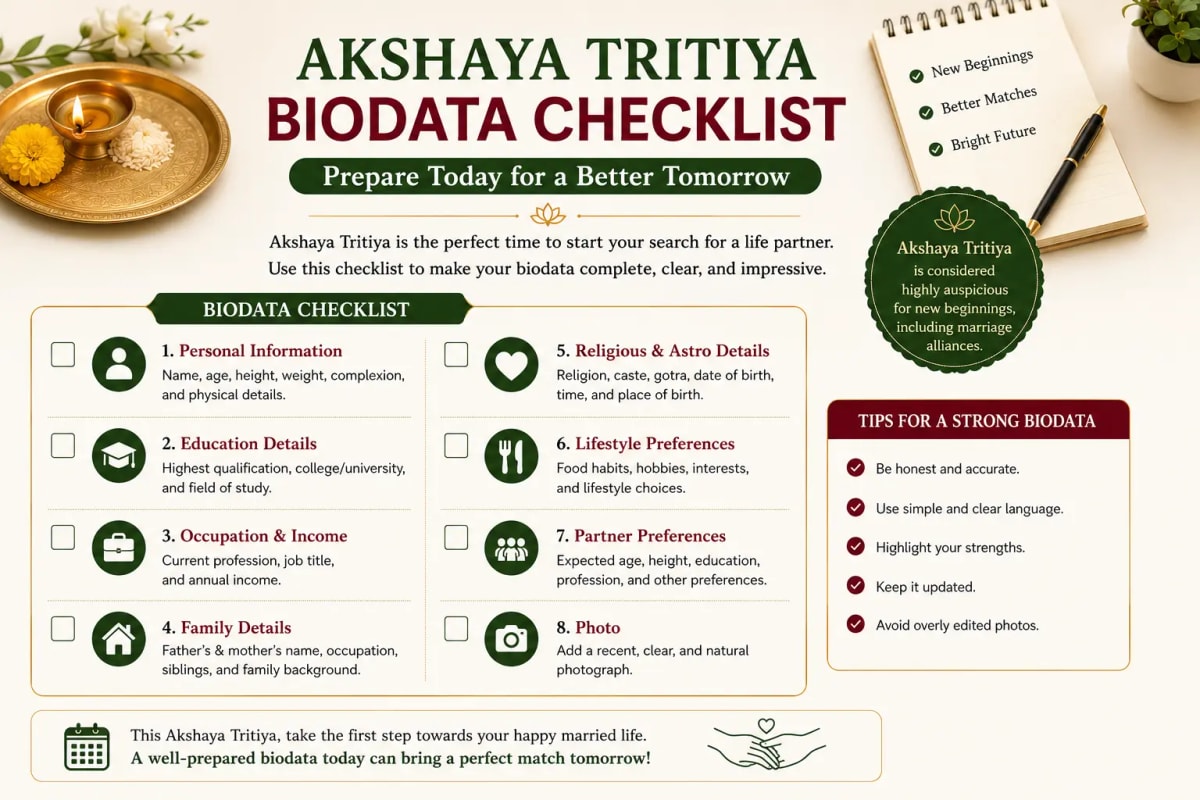
Why this single day creates so much demand
Most auspicious wedding dates require checking a specific couple's horoscope against the Panchang to confirm the timing works for them individually. This calculation naturally spreads weddings across many different dates throughout the season, since different couples get different auspicious dates.
Akshaya Tritiya breaks this pattern. It's considered a "self-auspicious" day — meaning no individual calculation is needed at all. Every couple, regardless of their specific horoscope details, can marry on this day without any concern about timing compatibility.
This sounds like it should make things simpler. In practice, it creates the opposite effect: because the date works for literally everyone, an enormous number of families all target the same single day, creating demand that far exceeds what any other wedding date sees.
In Rajasthan specifically, this has become a genuinely large-scale phenomenon — mass wedding ceremonies, sometimes involving hundreds of couples marrying simultaneously at a single venue or event, are a well-established Akshaya Tritiya tradition, alongside countless individual family weddings happening on the same day across the state and beyond.
What this means practically for your timeline
Venues. Popular wedding venues, especially in Rajasthan and across North India, are booked for Akshaya Tritiya sometimes a year or more in advance by families who know from experience how quickly availability disappears.
Priests and purohits. Since Akshaya Tritiya doesn't require individual muhurta calculation, purohits are in extremely high demand purely for conducting the ceremony itself across an unusually large number of simultaneous weddings — booking one in advance is essential.
The matrimonial process itself. Working backward from the date: if you want to be married on Akshaya Tritiya, you need time for your biodata to circulate, for a match to be found, for meetings to happen, for an engagement to be confirmed, and for the wedding planning itself to be organized — all before the date arrives. Given the scale of demand around this date specifically, families who start this process casually, assuming they have the same amount of time as for any other wedding date, often find themselves running out of runway.
The suggested timeline for Akshaya Tritiya
- 6-8 months before: Biodata should be finalized and actively circulating. This is meaningfully earlier than the 2-3 month lead time that's typical for other dates in the season — see our general timing guide for comparison at /wedding-season-2026-biodata-checklist
- 4-6 months before: Meetings and initial family conversations should be well underway. If you're still in early biodata circulation at this point without any active conversations, it's worth having an honest assessment of whether Akshaya Tritiya is realistically achievable or whether a later date in the season is more practical.
- 2-4 months before: Engagement or formal family agreement should ideally be reached by this point, given how much planning (venue, catering, guest logistics) needs to happen in the remaining window before a date with this much simultaneous demand.
- Immediately upon deciding on Akshaya Tritiya as the target: Book your venue and purohit as early as possible — this is the single biggest practical constraint for this specific date, more so than for any other wedding date in the calendar.
Is Akshaya Tritiya right for your timeline?
If you're reading this with less than 4-5 months remaining before the date, it's worth being realistic: finding a match, reaching an agreement, and securing a venue in a genuinely compressed timeline against this specific date's extraordinary demand is a real challenge. This isn't meant to discourage — plenty of families do make it work on shorter timelines — but going in with clear eyes about the compressed window, and being open to nearby alternative dates if needed, is more practical than being inflexibly attached to this one specific day if the timeline genuinely doesn't allow for it.
Frequently asked questions
How far in advance should I prepare my biodata if targeting Akshaya Tritiya? Six to eight months ahead, earlier than any other date in the wedding calendar. Because Akshaya Tritiya sees mass demand — including large-scale mass weddings in states like Rajasthan — venues, purohits, and even basic wedding services get booked exceptionally early.
Is Akshaya Tritiya only significant in certain states? While Akshaya Tritiya is observed and considered auspicious across most of Hindu India, its association with mass wedding ceremonies is particularly strong in Rajasthan, where large numbers of weddings — including community and mass marriage events — are traditionally concentrated on this single day.
Ready to create your own biodata? Start with our free builder or browse premium templates.